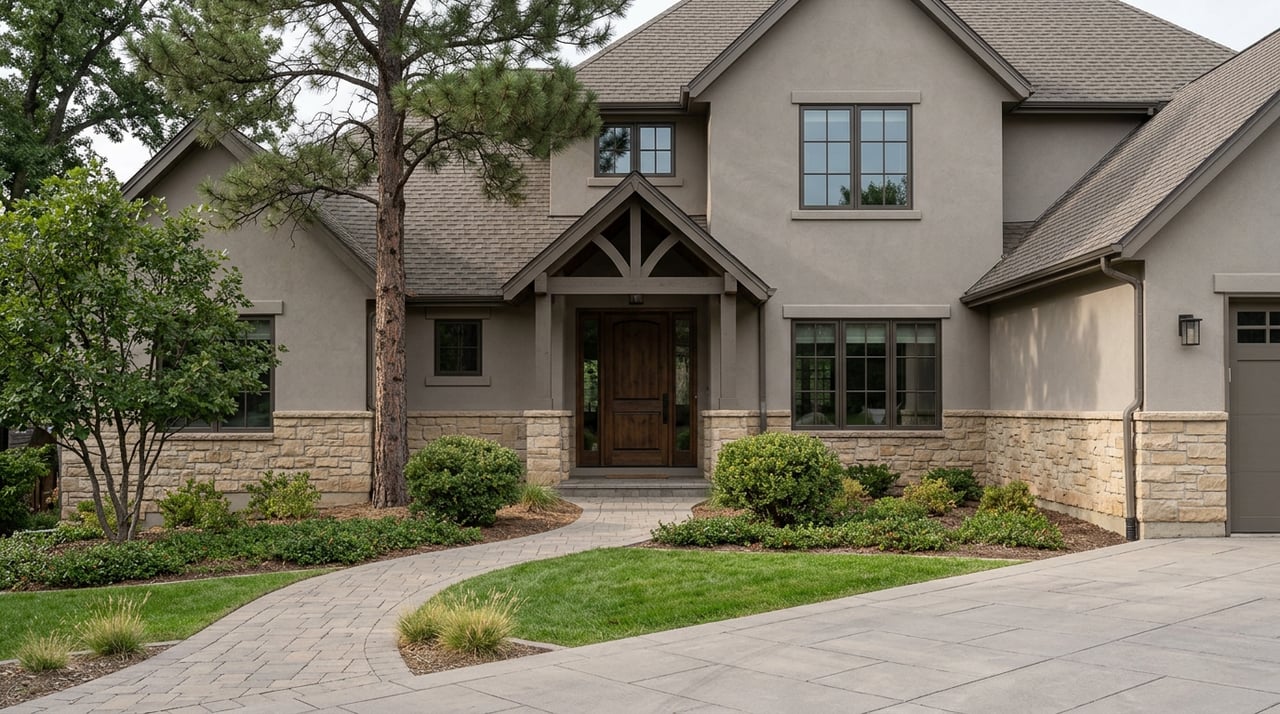
How Colorado Springs Metro District Taxes Change Home Costs
September 10, 2026
September 10, 2026
Two Colorado Springs listings can carry the exact same price and still cost their new owners hundreds of dollars a month apart. The difference is reflected in the tax bill and is tied to which taxing district each parcel sits inside.
That distinction matters more in Colorado Springs than in most cities its size. The city itself has counted well over 100 separate special financing districts layered across its neighborhoods, and nearly every major development approved in the last decade, including all of Banning Lewis Ranch, falls inside one. If you're comparing two homes priced within a few thousand dollars of each other, the district each one sits in can matter as much as the price tag.
A metropolitan district is a small local government, formed under Colorado's Title 32 statute, that exists to pay for the roads, water lines, sewers, and parks a new neighborhood needs before a single house is sold. Instead of the city paying for that infrastructure up front, the district borrows the money by issuing bonds, then repays that debt over decades through an extra property tax mill levy charged only to homes inside its boundary. The city's own planning department describes this as the standard tool for financing new growth, since state constitutional limits under TABOR make it hard for Colorado Springs to simply raise taxes citywide to build infrastructure for one new subdivision.
The tradeoff is that the same $450,000 house can carry a very different total tax bill depending on whether it sits inside one of these districts, and if so, how old that district is and how much debt it still has outstanding. A metro district is not the same thing as an HOA. A neighborhood can have one, the other, both, or occasionally neither, and each charges separately.
To see how much this can vary, it helps to look at two actual Colorado Springs districts sitting at opposite ends of the city and opposite ends of their own life cycles.
| Lowell Metropolitan District | Banning Lewis Ranch Metro Districts | |
|---|---|---|
| Location | Four blocks from downtown, in the historic Lowell neighborhood | Northeast Colorado Springs, a large master-planned community |
| Formed | 2000 | Multiple districts organized in phases since the mid-2000s |
| Current levy | Roughly 58 mills for tax year 2024, collected in 2025 | Residential debt service capped at 30 mills, plus up to 20 more for operations |
| What it funds | Water, streets, parks, drainage, and sewer for a century-old neighborhood | Roads, water, sewer, and parks built from the ground up for new construction |
| Recent event | 2023 bond refinancing forgave close to $4.9 million in principal and interest | Several sub-districts filed new budgets and bond schedules for 2026 as buildout continues |
Lowell sits a few blocks from downtown in a neighborhood built around the 110-year-old Lowell School, a Victorian-era landmark that has since been restored. Its metro district was formed back in 2000 with a service plan that capped the mill levy at 40 mills. Over time that cap has been adjusted upward, first to just over 54 mills and then, according to the district's own 2024 annual report, to 58.149 mills for the 2024 tax year. That puts Lowell among the highest residential mill levies tied to any special district in El Paso County.
Banning Lewis Ranch, on the other side of the city, is a much newer and much larger system, organized as a family of districts numbered 1 through 5 and 8 through 11, plus two regional districts that coordinate across the whole community. Its service plans cap residential debt-service mill levies at 30 mills, with room for up to 20 more mills for district operations, a structure that lands in a similar overall range to what Lowell homeowners already pay, even though the two neighborhoods could not look more different.
Lowell's story is worth knowing because it shows what can happen when a district's bonds outlast the growth that was supposed to pay for them. A statewide audit flagged Lowell's finances with language auditors use when a district's ability to keep operating is in real question, largely because the neighborhood's property values hadn't kept pace with the interest accruing on its bonds.
The district's own audited financial statements show what happened next. In June 2023, Lowell refinanced its outstanding bonds, replacing them with two new bonds totaling roughly $6.7 million and forgiving close to $4.9 million combined in unpaid principal and interest along the way. That refinancing, paired with new apartment construction inside the district boundary that added fresh taxable value, is what the district itself credits with getting its finances back on track. It is a reminder that a mill levy is not a fixed number frozen at closing. It moves with the district's debt, its budget, and how much new construction happens around you.
These costs are part of how some neighborhoods finance their infrastructure. Metro districts exist because Colorado's TABOR amendment makes it difficult for a city to raise property taxes on everyone to build infrastructure that benefits one new subdivision. Instead, the cost gets localized to the people who actually live there, which is also why residents of these districts often get amenities like pools, parks, and trails that a non-district neighbor down the road might not have access to.
The city's Special District Policy, adopted in August 2022, sets standard caps on how high these levies can go: a combined debt and operating mill levy ceiling in most cases, with exceedances only allowed by a specific City Council vote. That policy gives buyers a rough ceiling to check any new district against, but it does not tell you what a specific address is actually paying today.
When comparing listing prices, it's worth confirming what taxing entities sit behind them. A few concrete steps make this manageable:
Local MLS data compiled by the Pikes Peak REALTOR Services Corp shows the average Colorado Springs home took 48 days to sell in July 2026, up 21 percent from a year earlier, while active inventory held flat at 4,317 listings for a third straight month. List prices across the city have been sitting in the $450,000s to high $460,000s through the middle of 2026, with buyers holding more negotiating room than they had a couple of years ago.
That slower pace works in your favor here. A market where homes sit longer and buyers have more time to ask questions is exactly the kind of market where it's worth taking an extra day to pull the district disclosure before writing an offer, rather than finding out what you actually owe after closing.
Is a metro district the same thing as an HOA? No. They are separate entities that can each charge fees or taxes independently. A neighborhood can have a metro district, an HOA, both, or neither.
Can a district's mill levy go up after I buy? Yes. Levies can stay elevated while bonds are being repaid, or rise further if a district issues new bonds or takes on new capital projects through its normal budget process.
Does every new Colorado Springs neighborhood have one? Not every neighborhood, but most major developments approved in the last decade do, according to the city's own planning department, including the entirety of Banning Lewis Ranch.
A list price only tells part of the story in a city with more than 100 special districts stacked across its neighborhoods. If you're comparing homes in Colorado Springs and want to know what a specific address actually costs once you factor in its district, Lauren Trent can pull the parcel records and district disclosures before you make an offer, not after. Let's Connect.
This article is general information, not legal, tax or financial advice. Consult a qualified professional about your situation.
Stay up to date on the latest real estate trends.







Lauren is fiercely passionate about real estate. She believes everyone deserves an advocate in their corner. Whether you’re a seasoned investor or a first-time homebuyer, she is here to have your back. As an experienced agent, she faithfully guides her clients through every step of the buying and selling process.